
Editorial and Letters to the Editor Supercede News Stories and Features
Terry Heaton Takes on Diversity in the Workplace

Feb 22, 2004 in Q&A; comments (0)
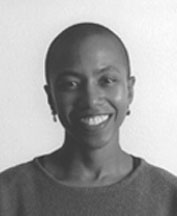
Q & A with Michelle Myers, editor-in-chief of the UC Berkeley Onyx Express
The article, "Newsweek Enlists College Journalists for Election Coverage," featuring Ms. Myers can be found here.
by Dawn Withers
A: The Onyx Express is a black student group newspaper started in the mid-1990s. It had a more radical political slant in terms of trying to change the government and society. It has changed hands since then and weíve changed the focus to what black students are doing on UC Berkeley campus and in the community. We have an international section that focuses on news in the African diaspora. When I first started as editor of The Onyx, one of my first goals was to increase staff and readership and coverage. I feel like I have accomplished that but there are still so many other goals for the paper. I try to make it more campus focused and more community focused. My goal this year is to make it more political now and make our articles pertinent to whatís happening in politics and the local black community in Oakland and Berkeley. Our mission is to give a voice to those who donít have a voice in mainstream media. The Onyx gives (anyone can write for us) a space for expressing whatís going on in the African American community and give a voice to marginalized people on the campus. Since The Daily Californianís focus is campus news in general there just isnít that much space for covering marginalized communities. The Daily Californian is attempting to make an effort to reach out to the community but itís one of those problems that builds upon itself.
A: I applied for it and I was selected. I had to submit a resume and sample columns and a paragraph about what you would do for the column. I wrote that I would use the column to try and enlighten the campus about social issues they wouldnít read about otherwise. I was qualified to do it because I am accustomed to interacting with people from different communities so I feel I know how to write to many different types of people. I grew up in a diverse community (Riverside, Calif.) and Iíve taken a variety of classes at Cal that deal with social issues. I am used to having friends from all different backgrounds and often being the only black student in many classes. By interacting with those other students in my classes, I felt I was able to write about those issues. During the columnís run, I wrote about Prop. 54, the recall election, lack of black students on campus and how it was draining our resources. My last column was about political correctness.
A: Iíve been writing for The Onyx for a couple of years and I wrote some editorials in high schools, but we never really discussed editorial writing. I read magazine editorials and newspaper editorials but itís the way that I express my opinion and writing in a way that someone else can understand it that makes it a column. I never really learned how to write a column.
A: On the one hand, I am just Michelle Myers and I can only speak from my personal experiences. On the other hand, Michelle Myers is black and Iíve been in so many situations where Iíve been the only black female. I took to the role of being the black voice but I didnít ever intend to say that I represent all African Americans. Thatís problematic. But when youíre the only black writer on a paper with 30 staff writers, you have the responsibility to speak up for black people. On The Daily Californian, I felt I was the black choice, the black representative. It was challenging because I felt some pressure from the black community to be that representative. I felt this responsibility because I could definitely educate the staff and readers about African Americans on campus. But I am just Michelle Myers and I do just love to write. I just love to write and I feel that I am competent, capable and confident to write about anything. I want to be known as a writer who can write about anything but at the same time I am not going to neglect my cultural responsibilities to talk about black issues. But I donít want to be tied to the race/racism category.
A: I am really interested in doing print journalism. I am thinking about a master's in public policy or journalism. Eventually I do want to do journalism but magazine journalism because you can take more time to explore topics. Ideally Iíd like to have my own magazine, a women of color magazine.
A: I received an e-mail and my initial reaction was shock and excitement. I felt shocked that I was picked. I will write one column every five weeks online, and if thereís space, in print in the magazine. I write from my campusí perspective, as a student at Berkeley.
A: Iíve been at Berkeley for four years and I feel itís hard to select one person to represent Berkeleyís voice. Because I write for The Onyx and am involved in the African American community, I donít feel like I am involved with mainstream campus political activities. But why not? I am aware of politics and bureaucracy and I am as qualified as any other student here.
A: I donít know. Iíve read the interviews on Mediabistro and the columns that have been printed and I donít know that we represent young people across the country. First we are in college, that discounts a lot of young people, and I am the only black one. I didnít see ethnic variety among those of us selected. Our campuses are well known for different things. They are prestigious universities that donít necessarily represent young people across the country.
A: When I was asked by Mediabistro why I felt I was chosen for the position, I realized I was going to be the token black girl and I have this obligation to be the minority voice. I donít feel that I was chosen because I am African American. I think I was chosen because of my writing style and I know what made me different was how I wrote my opinions and how I got my ideas across.
A: I donít think I am expected to represent everyone who isnít white. I am not sure Newsweek would expect that from me, being the only person of color chosen. I do feel some responsibility to write from a black perspective.
A: One of the things Iíve learned writing for Newsweek is that Iíve really appreciated writing for The Onyx Express. I can write and say what I want to say in the way I want to say it for The Onyx. For Newsweek, my column was really edited and sentences rephrased in language that I wouldnít use. Those changes were made and I didnít have any control over what was changed. Just changing one phrase can change your voice.

WHAT DO YOU WANT TO SAY?
