
Editorial and Letters to the Editor Supercede News Stories and Features
Terry Heaton Takes on Diversity in the Workplace

Diversity Ignored
Some news is no news when the big story hits and so many voices are left out
by Jackie Jones
There are times when I read a story in the newspaper or see one on TV and think, "Where's the news in this?"
Usually, that means the news in the story is so obvious to me that there is no surprise or sense of wonderment -- something like: "Recession Worse for the Unemployed."
Well, duh.
So, it came as no surprise when I read postings on the NABJ listserv shortly after the terrorist attacks on the World Trade Center and the Pentagon from members saying they were shut out of major coverage. So many black reporters found good stories, only to have their editors take them away and give them to white reporters, or their ideas were simply dismissed. Some found themselves filing feeds to other reporters and getting not so much as a tagline or a name in a contributor's box.
In the initial aftermath of the attacks, everyone was running on adrenaline. Getting information to the public was paramount, and reporters just fed whatever information they could get to anyone who would take it from them. The glory of the byline was not paramount. It was only after the initial shock, the tallying of bodies and the estimates of damage began to subside a bit and the tales of the victims and their survivors began to be told that the sense of business as usual returned.
In stories about the brave police and firefighters, you did not see images of African Americans and Latinos. Surely, my brother quipped, New York has some black firefighters. You never saw any surrounding New York Mayor Rudy Giuliani at his news conferences. It was weeks later when I saw, finally, a Hispanic emergency dispatcher interviewed at length on television. I still count and remember the faces of color I see in interviews from the crash scenes, or with experts and pundits. Aside from Secretary of State Colin Powell and National Security Adviser Condoleezza Rice, they were -- and continue to be -- few and far between.
Then the e-mail came. It was one of those read-and-add-your-name petitions, calling for some sort of acknowledgment of Leroy Homer, a black pilot, who went down with the plane that plowed into a Pennsylvania field instead of hitting a terrorist's target. Several passengers on that plane banded together to confront the terrorists. Those brave people died in a Pyrrhic act of heroism. All the images we saw of the people who called loved ones on their cell phones in those final minutes were white people.
And yet the e-mail so urgently told us that Homer was a hero, too, and that he should not be forgotten. Of course, there was no way to know if he ever managed to fight the attackers, or if they killed him before he could resist. One of the passengers who called home said it appeared that both pilots had been killed or incapacitated. We'll never know, but clearly many African American readers and viewers were looking for some recognition of black heroism.
That I didn't see much of it didn't surprise me.
Clem Richardson, a New York Daily News columnist, worked his way into the coverage. "As a columnist, I was in a strange position," he said. "Since my columns, both Great People and City Beat, are not 'news' columns, no one thinks of putting you in the mix. And since my columns were suspended following the attack, I found myself literally sitting on my hands for a time after the first day's coverage, when I was stationed at Long Island College Hospital, a triage center, then the Brooklyn Bridge interviewing people (who were) fleeing downtown, then into the office to do some rewrite.
"I was able to nose my way into some of the coverage by checking the schedule each day and proposing stories that were not on it. So, I got in pieces about funeral homes offering special deals to civil service victims and, later, how Chinatown was still hurting from being in the no-go zone for weeks afterward."
You have to wonder why a man with nearly 25 years in the business, who writes not one but two columns, had to figure out a way to squeeze himself into the mix each day.
But after reading the listserv and listening to current and former colleagues vent their frustrations, I realized little had changed in terms of our being considered the go-to people in the newsroom.
No headlines there.
Nor was I stunned to hear that the Deadline Club of New York hosted a forum on coverage of the attacks and their aftermath and out of six panelists, not one of them was African American. Surely, experienced, respected black journalists are not hard to find in New York City. Gerald Boyd, the newly named managing editor of The New York Times, immediately sprang to my mind.
Who was surprised by a recent report that said a sense of limited opportunities and few professional challenges are most often cited as the reason journalists of color leave their newsrooms?
Last month, UNITY: Journalists of Color, Inc. and the American Society of Newspaper Editors released the study that drew just that conclusion. "Alarmed by the study results and the large number of minority journalists leaving newsrooms," their news release said, "ASNE and the minority journalists organizations have forged an alliance to keep minority journalists in the industry."
The study also said that, "Journalists of color are not convinced that they have equal opportunities for advancement or that they are being judged by the same evaluative criteria as white journalists.
"Finally, journalists of color feel strongly that they have made their concerns known, but that they haven't yet been heard. Thirteen studies and 4,800 interviews over 12 years make their point."
Now just who was "alarmed" by that study? Surely not UNITY, which was formed to help bring more people of color into the news industry and keep them there in substantive roles. And it certainly shouldn't be ASNE, which has been looking at the issue of diversity and racial parity in newsrooms for years and has been frustrated in its own attempts to achieve parity by the year 2000.
People of color make up one-third of the U.S. population, but less than 12 percent of this country's newspaper professionals. Last year, more journalists of color left newspapers than were hired.
I wish I could say I was shocked and surprised. But I am not. Angry? Yes. Frustrated? Yes. But alarmed? No.
As usual, the groups say the time for lip service is over and it's time to make significant change. We have the resources and the will, they say, to produce radical change.
OK, surprise me.
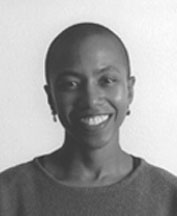
Jackie Jones is a former national board member of the National Association of Black Journalists. She is assistant business editor at The Washington Post. She can be reached by e-mail at jonesja@washpost.com

WHAT DO YOU WANT TO SAY?
